
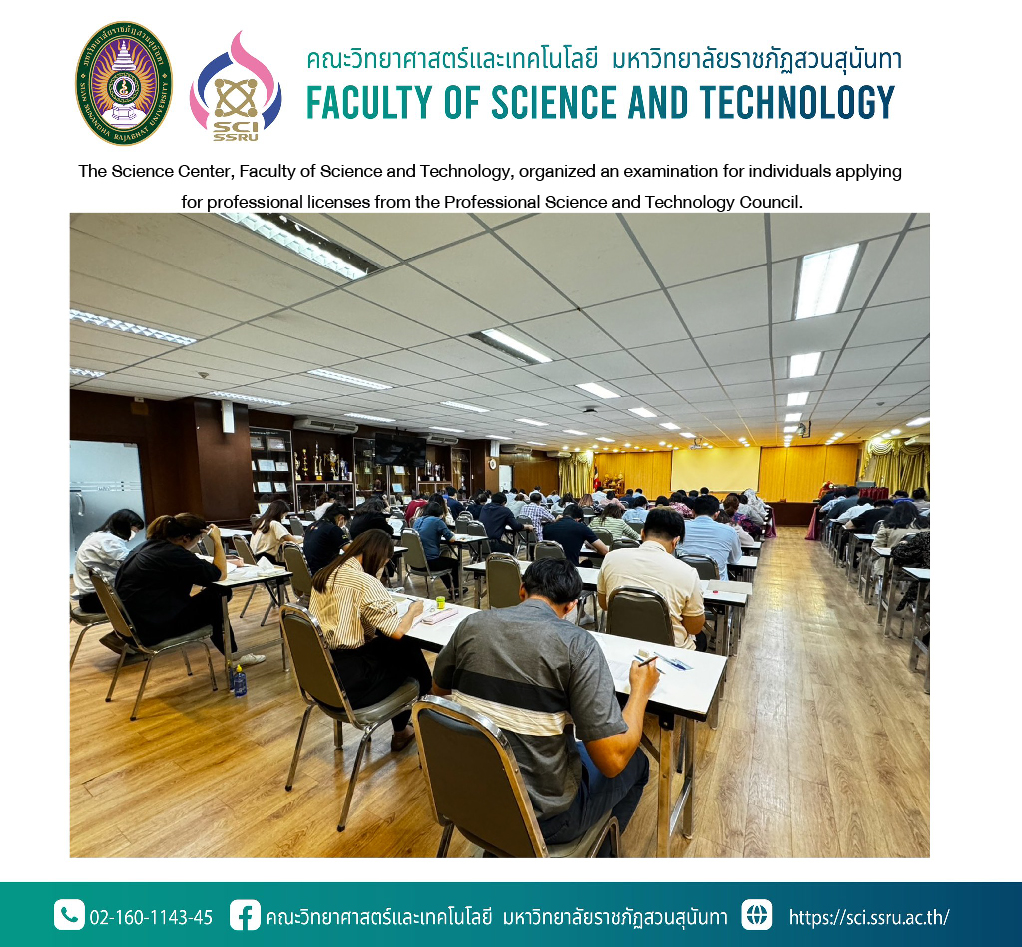
On October 26, 2024, the Science Center, Faculty of Science and Technology, Suan Sunandha Rajabhat University, organized an examination for individuals seeking professional licenses from the Professional Science and Technology Council in the specialized fields of Environmental Impact Assessment and Pollution Control. This included five areas: water pollution control, air pollution control, noise and vibration pollution control, solid waste and sewage control, and hazardous waste control. The examination was overseen by Associate Professor Siwapun Chuin. The Faculty of Science and Technology has been authorized by the Professional Science and Technology Council to organize such exams since 2016. The exam took place in Room 26103, First Floor, Building 26, Faculty of Science and Technology.
The professional certification process is one of the key responsibilities of the Professional Science and Technology Council. It ensures that only qualified individuals with adequate knowledge and expertise are allowed to work in the field of science and technology, particularly in areas that impact public health and safety. The Science Center plays a crucial role in supporting this mission by conducting exams that help maintain high professional standards.
The outcomes of this certification process contribute to improving the quality of personnel in the science and technology profession, increasing credibility in environmental and public safety-related work. Additionally, it supports sustainable development in various areas such as pollution prevention, sustainable urban development, and the creation of a high-quality workforce. This initiative aligns with the following Sustainable Development Goals (SDGs):
- Goal 4: Quality Education – By organizing exams for professional certification in science and technology fields, the initiative promotes skill development and lifelong learning opportunities that are essential for the labor market.
- Goal 8: Decent Work and Economic Growth – By ensuring professional standards, it helps develop a skilled workforce and promotes employment in critical sectors, such as pollution control and environmental impact assessment.
- Goal 16: Peace, Justice, and Strong Institutions – The certification process ensures transparency, accountability, and professional standards, building public trust that professionals in these fields have the ethical conduct and expertise necessary to carry out work that impacts the community.
This initiative not only enhances the professional qualifications of individuals but also supports broader societal goals, contributing to sustainable development in both environmental and social dimensions.