
Faculty of Science and Technology Promotes Careers and Generates Income for
Samut Songkhram Communities Through Science, Technology, and Innovation.
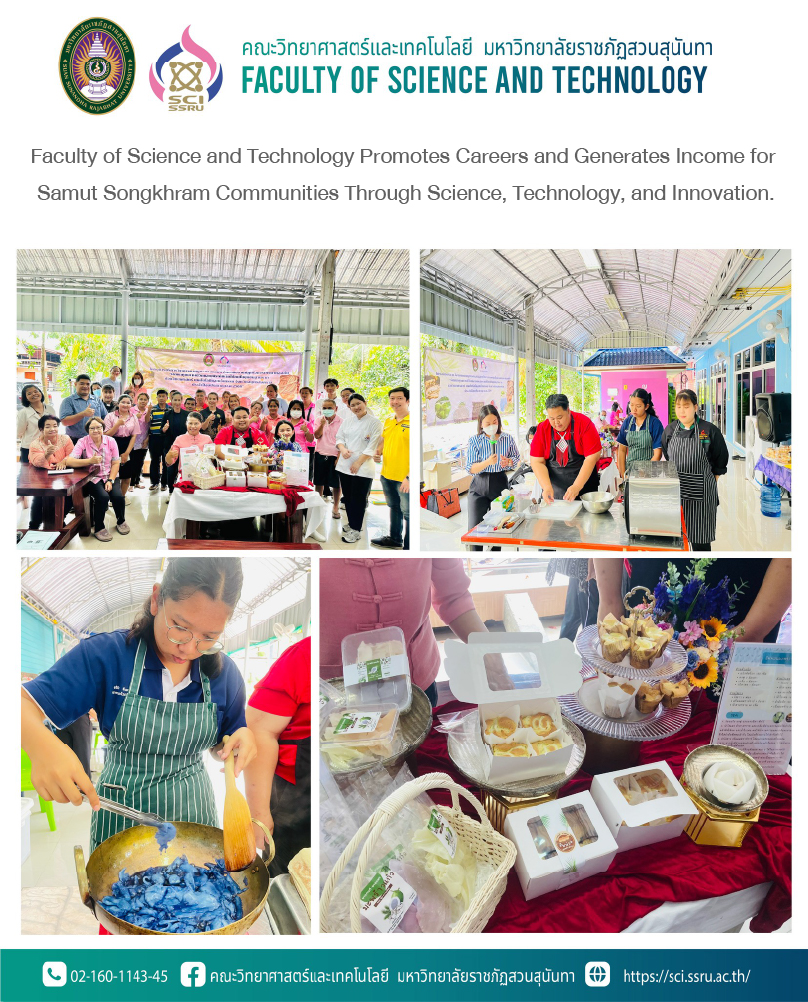
On February 18, 2025, the Faculty of Science and Technology conducted a field visit to Samut Songkhram Province to implement the project "Enhancing the Quality of Life and Income Levels of Grassroots Communities Through Science, Technology, and Innovation" for the 2025 fiscal year. A practical training workshop was held for participating households to transfer knowledge on the processing of coconut products, a key economic crop of the province.
This activity was led by Assistant Professor Dr. Pattama Hirunyopas, along with faculty members, research and academic services staff, and students from the Home Economics program. Mr. Thongchai Sarakul, a skilled teacher and head of the Food and Nutrition Department at Samut Songkhram Technical College, was a guest speaker, sharing knowledge about the processing of mapraw kaew and coconut chiffon, products that can add value and be developed into careers for the community. During the workshop, the speaker demonstrated the making of mapraw kaew and coconut chiffon, and the villagers had the opportunity to practice, ensuring understanding and effective application of the knowledge. This training not only provided villagers with skills in producing processed coconut products but also offered a pathway to create jobs and increase household income in the local area, aligning with the goal of strengthening and sustaining the grassroots economy.
The project "Enhancing the Quality of Life and Income Levels of Grassroots Communities Through Science, Technology, and Innovation" continues to advance the development of various skills and knowledge for people in the area, aiming to enhance competitiveness and improve the quality of life of the community. This project aligns with the Sustainable Development Goals (SDGs): Goal 1, Eliminate Poverty, by enhancing vocational skills and increasing income opportunities for people in grassroots communities; Goal 2, Eliminate Hunger, as the development and expansion of processed coconut products contribute to food and nutritional security; Goal 4, Equal Education, by focusing on transferring knowledge and providing practical training; Goal 8, Decent employment and Economic Growth, as the development of food industry skills increases job opportunities and economic stability for the community; Goal 9, Industry, Innovation, and Infrastructure, by applying technological and innovative knowledge to career development; Goal 12, Sustainable production and consumption, as the processing of local raw materials reduces waste and increases product value for market competitiveness; and Goal 17, Cooperation for Sustainable Development, through the integration of cooperation between educational institutions, government agencies, and the community to maximize the benefits of local development.